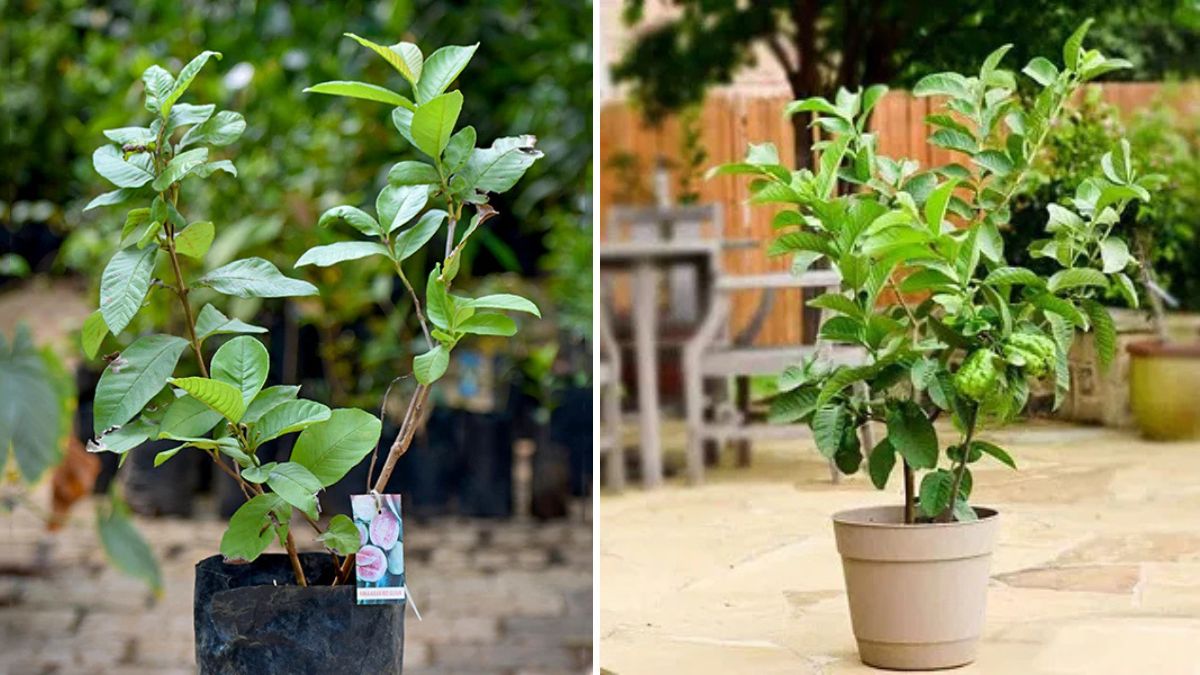
Growing guava in a pot may sound challenging, but it is surprisingly easy—and extremely rewarding. With the right care, a single guava plant in a container can give you 15–18 kilograms of delicious, juicy fruits every year. Whether you live in a city apartment or have a small terrace garden, guava is one of the best fruit trees you can grow in pots.
This complete guide will teach you everything: from selecting the right variety, choosing the pot, soil mix, fertilizers, pruning, and the exact conditions needed to get maximum fruits.
Let’s begin your journey to growing your own guava orchard in a single pot!
🌱 Why Grow Guava in Pots?
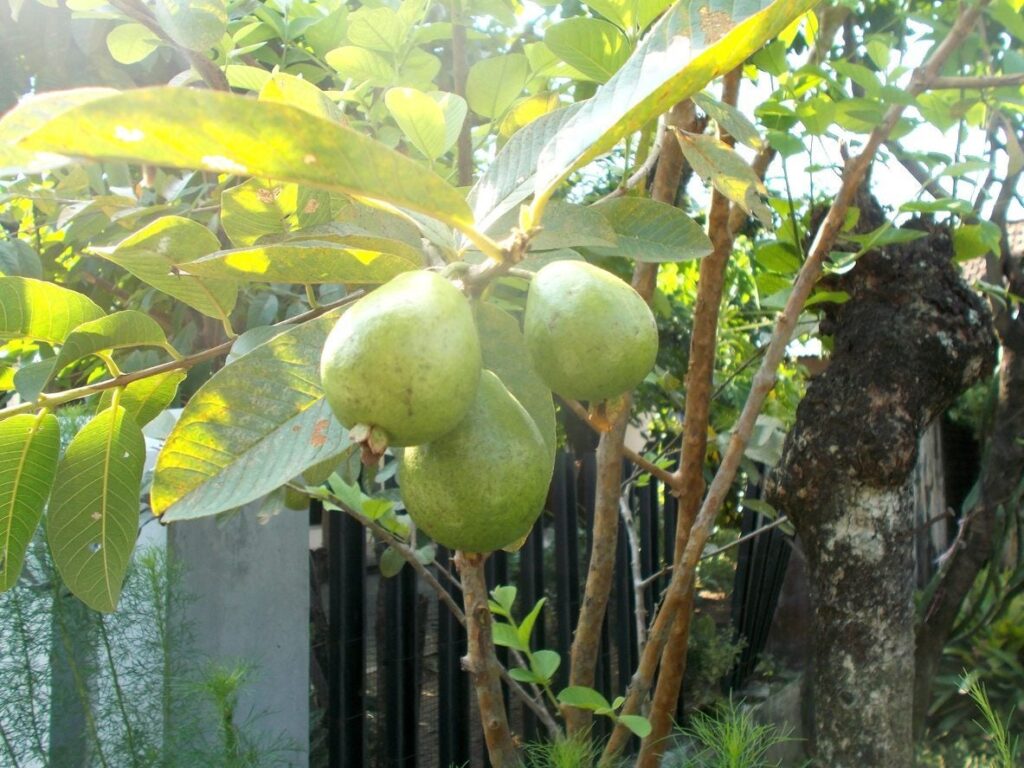
Guava is one of the easiest and most forgiving fruit trees for home gardeners. Here’s why:
- Grows well in containers
- Requires very low maintenance
- Fruit production is high and quick
- Tolerates heat, humidity, and drought
- Resistant to most pests
- Provides fruits almost all year
If you follow the correct method, you can enjoy sweet, aromatic, pesticide-free guavas straight from your balcony.
🍈 Step 1: Choosing the Best Guava Variety for Pots
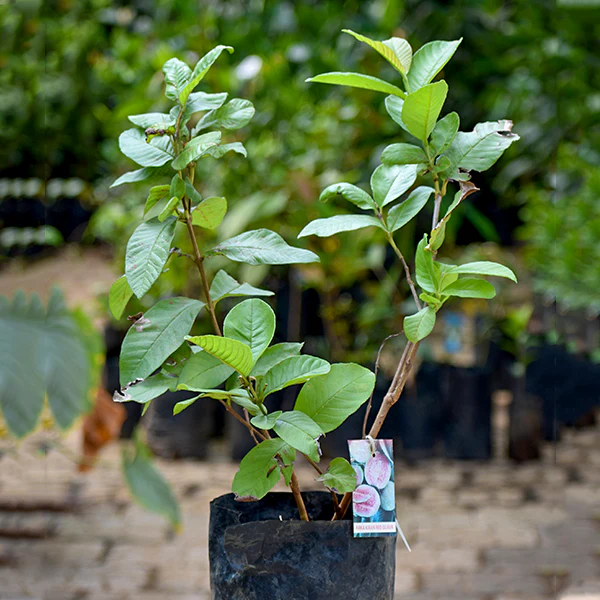
Not all guava varieties perform well in containers. The best ones are dwarf or hybrid types.
✔ Best varieties for pot growing:
- VNR Bihi Guava (excellent for 15–18 kg yield)
- Taiwan Pink Guava
- L-49 (Sardar) Guava
- Allahabad Safeda
- Thai White Guava
- Lalit Guava
Why these varieties?
- Compact plant structure
- Early fruiting
- Heavy productivity
- Sweet taste and good size
Avoid wild or local roadside varieties—they grow tall and produce fewer fruits in pots.
🪴 Step 2: Choosing the Right Pot
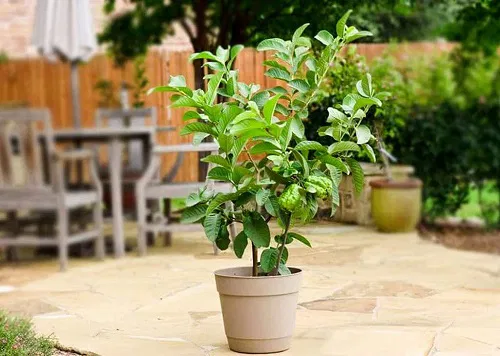
Guava trees need space for roots to grow. Pot size affects fruit size and yield.
✔ Ideal pot size:
- Minimum 18–24 inches deep
- 18–24 inches wide
- 40–60 liter grow bag
- Earthen pots, plastic pots, drums, or cement pots—all are suitable
Make sure the pot has good drainage holes.
🌿 Step 3: Perfect Soil Mix for Maximum Fruits
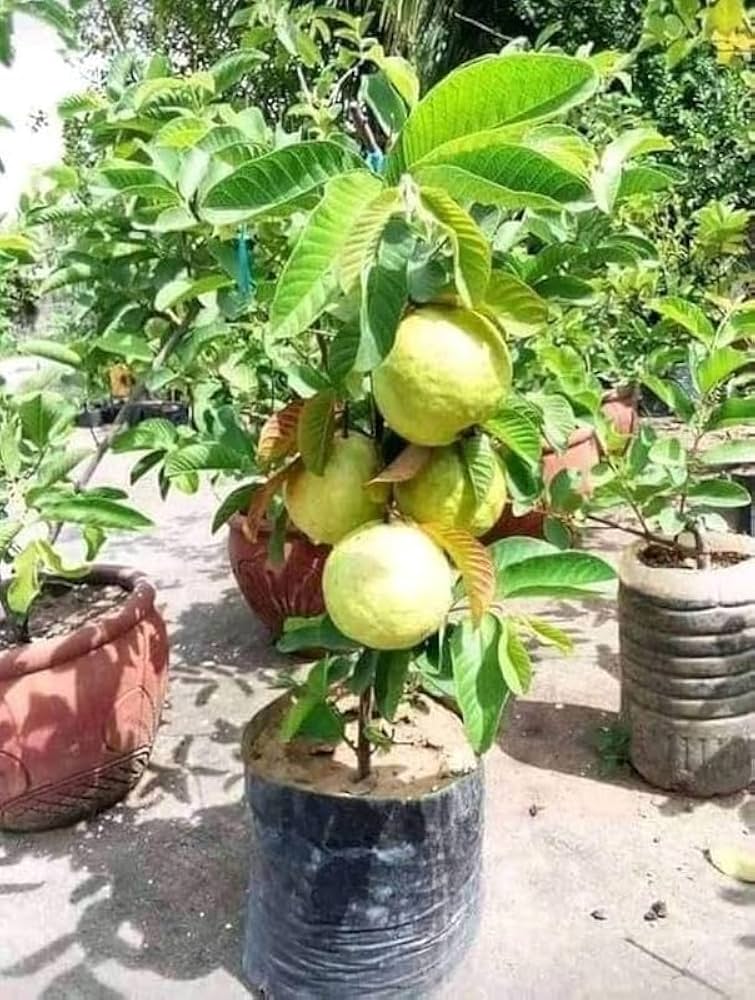
Guava needs light, airy, and nutrient-rich soil.
Best soil mix:
- 40% garden soil
- 40% cow dung compost or vermicompost
- 20% river sand / cocopeat
Add:
- Neem cake powder (2 handfuls)
- Bone meal or potash-rich fertilizer
- A handful of perlite (optional but helpful)
This soil encourages strong roots, better flowering, and bigger fruits.
🌱 Step 4: Planting the Guava Sapling
Always buy a grafted plant instead of growing from seeds.
Grafted plants produce fruits within 1–2 years, while seed-grown guavas take 4–6 years and produce unpredictable results.
Planting steps:
- Fill the pot 70% with soil mix.
- Place the sapling in the center.
- Fill remaining soil around it.
- Press gently to remove air pockets.
- Water thoroughly.
- Place in bright indirect sun for 4–5 days.
After that, move it to full sunlight.
🌞 Step 5: Sunlight Requirement
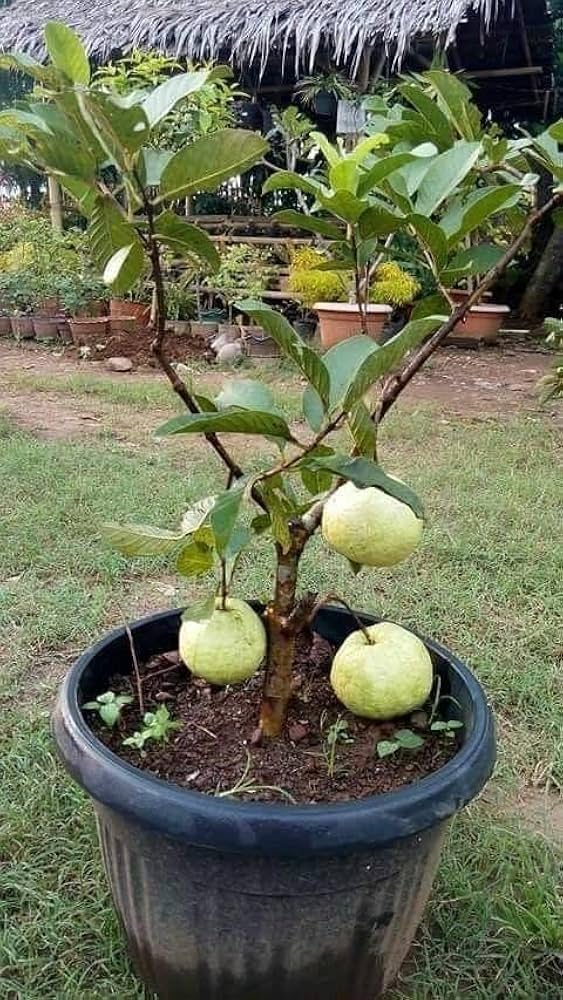
Sunlight = More Flowers = More Fruits
Guava loves strong sunlight.
✔ Daily sunlight needed:
- 6–8 hours of direct sunlight
Terraces, rooftops, and open balconies are perfect.
Plants grown in low sunlight will grow leaves but produce very few fruits.
💧 Step 6: Watering Schedule
Guava plants hate overwatering. But they also cannot tolerate long dryness when fruiting.
Watering rules:
- Water deeply every 2–3 days in summer
- Once a week in winter
- Always water when top 2 inches of soil feel dry
During flowering and fruiting, maintain consistent moisture.
🧪 Step 7: Fertilizing for Heavy Fruit Production
If you want 15–18 kg of fruits, feeding your plant correctly is crucial.
Fertilize every 25–30 days using:
- 2 kg of cow dung compost
- 2 handfuls of neem cake powder
- 1–2 handfuls of bone meal
- Banana peel fertilizer
- Mustard cake water (once a month)
- Seaweed extract spray (every 15 days)
During flowering season:
Add potash-rich fertilizer to improve fruit size and sweetness.
Avoid too much nitrogen—it causes leaf growth instead of fruiting.
✂️ Step 8: Pruning – The Secret to 18 KG Fruit
Guava fruits grow on new branches.
Pruning encourages new growth and increases flowers.
Prune 2–3 times a year:
- After fruiting
- Before monsoon
- Before winter flowering
How to prune:
- Cut long branches, leaving only 6–8 nodes
- Remove dead or weak stems
- Shape the plant to keep it compact
Proper pruning = More branches = More fruits
🌸 Step 9: Flowering & Pollination
Guava flowers are small, white, and fragrant.
To increase pollination:
- Shake the plant gently in the morning
- Keep flowering plants nearby to attract bees
- Avoid chemical sprays during flowering
More pollination = More fruits per plant.
🍈 Step 10: Fruit Development & Care
Once fruits appear:
- Reduce nitrogen fertilizers
- Increase potash
- Water regularly
- Support heavy branches
- Protect fruits from birds using net bags
Guava fruits take 90–120 days to fully mature.
🐛 Step 11: Pests & Diseases (Easy to Control)
Guava is naturally hardy, but may face:
Common pests:
- Fruit flies
- Aphids
- Mealybugs
- Leaf miners
Natural solutions:
- Neem oil spray every 7–10 days
- Soap water spray
- Sticky yellow insect traps
Common diseases:
- Leaf spot
- Root rot (due to overwatering)
Improve airflow and avoid waterlogging to prevent diseases.
📅 Step 12: Annual Growth Timeline
Year 1:
- Root establishment
- Moderate growth
- Few fruits (if grafted)
Year 2:
- Strong branching
- Heavy flowering
- Good fruiting (8–12 kg)
Year 3:
- Full maturity
- Large fruits
- Peak yield: 15–18 kg annually
🍏 Harvesting Guava
Harvest when:
- Fruit becomes slightly soft
- Skin turns light green or yellow
- Aroma becomes strong
Do not let fruits over-ripen on the plant—this reduces next season’s yield.
🌿 Tips to Get Maximum Fruits in Pots
- Choose the right dwarf/hybrid variety
- Keep plant in 6–8 hours of sunlight
- Prune multiple times a year
- Add compost monthly
- Maintain consistent watering during fruiting
- Use potash-rich fertilizers
- Protect flowers from strong wind
- Avoid root disturbance
- Pollinate manually if needed
Follow these steps and you will get 15–18 kilograms of guavas easily from one pot.
🌟 Final Thoughts
Growing guava in pots is not just possible—it’s incredibly rewarding. With proper soil, sunlight, feeding, and pruning, your guava plant can become a mini fruit factory right on your terrace or balcony. The joy of picking fresh, sweet guavas grown without chemicals is unmatched.