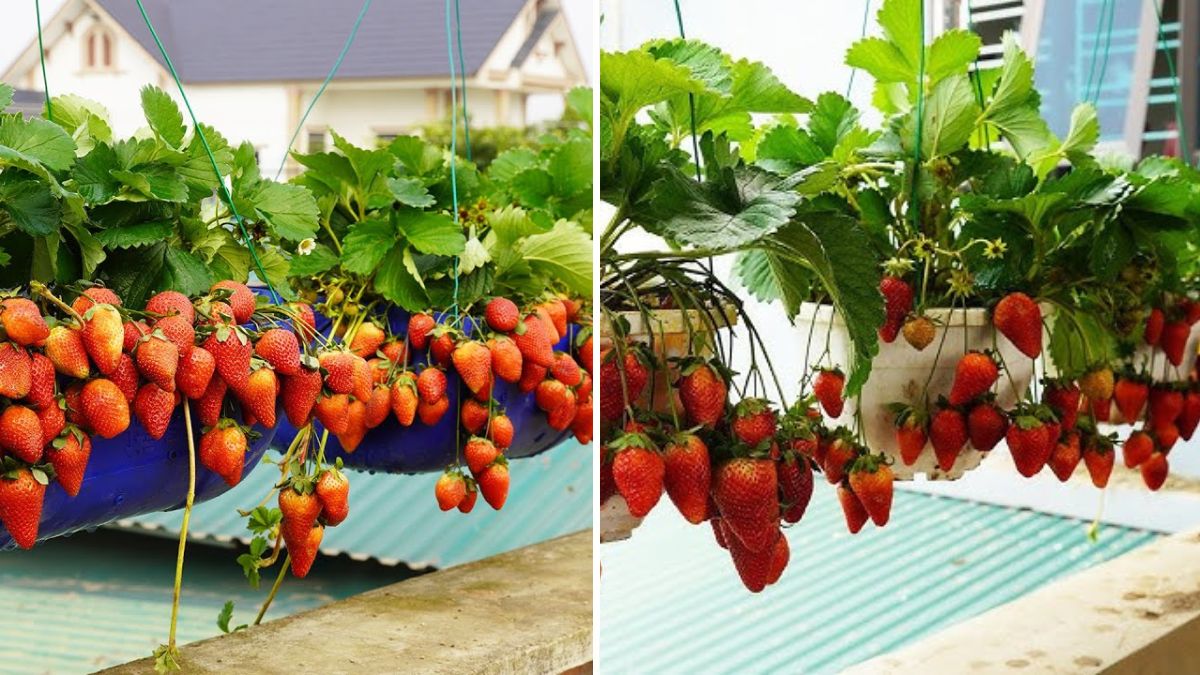
Strawberries are one of the most loved fruits in the world. Their bright red color, sweet fragrance, and juicy taste make them irresistible. The best part? You don’t need a farm or a large garden to grow them. With the right method, you can grow tons of strawberries at home—in pots, grow bags, hanging baskets, or even in small balcony spaces. This complete guide will take you from planting to harvesting, ensuring you enjoy bowl after bowl of fresh, organic strawberries.
Why Grow Strawberries at Home?

Growing strawberries at home offers many advantages:
- Fresh, chemical-free fruits
- Low-maintenance plants
- Perfect for small spaces
- Long fruiting season
- Kids love growing them
- Beautiful ornamental plants
Homegrown strawberries taste richer and sweeter compared to store-bought ones, which are often picked unripe. When you grow them yourself, you harvest them at peak sweetness.
1. Best Strawberry Varieties for Home Growing

To grow lots of strawberries, choosing the right variety is crucial. There are three main types:
1. June-bearing Varieties
These give one large harvest in late spring or early summer. Perfect if you want big batches of berries.
Examples: Chandler, Sweet Charlie, Earliglow.
2. Everbearing Varieties
Produce fruits 2–3 times a year: spring, summer, and fall.
Examples: Quinault, Everest.
3. Day-neutral Varieties
Best for home gardeners because they fruit continuously almost year-round in mild climates.
Examples: Albion, Seascape.
Tip: For continuous harvesting, plant a mix of everbearing + day-neutral varieties.
2. Choosing the Right Pot or Growing Space

Strawberries love to grow in containers! Here’s what you need:
Pot Size:
- Minimum 8–10 inches deep
- For more harvest, use 12–14 inch pots
- Hanging baskets and vertical planters also work
Drainage is Crucial:
Strawberries hate standing water. Ensure:
- Many drainage holes
- A layer of pebbles at the bottom (optional but helps)
Where to Place the Pot:
- A sunny spot with 6–8 hours of direct sunlight is ideal
- Balconies facing south or west are perfect
- Avoid completely shaded areas
3. Soil Mix: The Secret to Huge Strawberry Harvests
Strawberries prefer loose, fertile, well-draining soil.
Use this ideal soil mix:
- 40% garden soil or cocopeat
- 40% compost (vermicompost / cow dung compost)
- 20% sand or perlite for drainage
Mix in:
- 1 handful neem cake powder (prevents pests)
- 1 spoon bone meal or banana peel powder (for flowering)
Strawberries grow best in slightly acidic soil (pH 5.5–6.5).
If your soil is alkaline, add cocopeat or compost to balance it.
4. How to Plant Strawberry Seedlings

Strawberries grow better from runners or nursery plants than seeds. Seeds take longer and may not produce much fruit.
Planting Steps:
- Fill your pot with the prepared soil mix.
- Make a shallow hole and place the strawberry plant.
- Keep the crown (center part where leaves emerge) above soil level.
- Water gently.
- Place in a sunny location immediately.
Spacing:
If planting in a large pot or bed, keep 8–10 inches spacing between plants.
5. Watering Your Strawberry Plants

Strawberries need consistent moisture but not waterlogging.
Watering Tips:
- Water 2–3 times a week in cool weather.
- In hot summers, water daily, but lightly.
- Keep soil moist but not soggy.
- Mulch with straw, dry leaves, or cocopeat to retain moisture.
Avoid watering on the fruits to prevent fungal diseases.
6. Feeding / Fertilizing for Maximum Fruit Production
To grow tons of strawberries, you must feed the plants regularly.
Use the following monthly schedule:
Fertilizer Schedule:
- Every 15 days: Add a handful of vermicompost.
- Once a month: Liquid fertilizer (like compost tea or seaweed solution).
- Before flowering: Add banana peel fertilizer or bone meal.
- During fruiting: Add potash-rich fertilizers to improve sweetness.
Avoid too much nitrogen—it produces leaves, not fruits.
7. Sunlight Requirements
Strawberries need full sunlight for high fruit yield.
- Minimum: 6 hours of sun
- Best: 8 hours of sun
If sun is low, use a sunny window or place the pot on the terrace.
8. Mulching: The Secret to Cleaner, Bigger Strawberries
Strawberries touch the ground, making them prone to rot.
Using mulch helps in:
- Keeping fruits clean
- Reducing fungal diseases
- Maintaining moisture
- Lowering weed growth
You can use:
- Straw
- Dry leaves
- Rice husk
- Coco chips
- Pine needles
9. Strawberry Flowering & Pollination
Strawberry plants produce white or pink flowers before forming fruits.
Pollination Tips:
- Bees help naturally
- Indoors? Gently shake plants or use a small brush
Good pollination = bigger and more berries.
10. Pests & Diseases and How to Control Them
Common Pests:
- Aphids
- Spider mites
- Mealybugs
Natural Remedies:
- Neem oil spray every 15 days
- Soap water spray for aphids
- Keep plants clean and remove dried leaves
Common Diseases:
- Powdery mildew
- Root rot
Prevention:
- Use well-draining soil
- Avoid overwatering
- Provide good airflow
11. Harvesting: When and How to Pick Strawberries
Strawberries are ready to harvest when:
- Fully red
- Shiny
- Soft to touch
- Sweet fragrance
Once they turn red, pick them within 1–2 days for best taste.
How to Harvest:
- Cut with scissors
- Or gently twist and pull
- Harvest regularly to encourage more fruiting
12. How to Multiply Strawberry Plants for FREE
Strawberries produce “runners”—long stems that grow new baby plants.
How to Use Runners:
- Place the baby plant in a small pot with soil
- Keep the runner attached
- After 2–3 weeks, roots form
- Cut the runner
- You now have a free new strawberry plant!
This can double your strawberry production every season.
13. Growing Strawberries in Summer, Winter & Rainy Season
Summer:
- Provide shade net during extreme heat
- Water daily
- Mulch heavily
Winter:
- Best season for strawberries
- Full sunlight needed
- Less watering
Rainy Season:
- Avoid overwatering
- Protect pots from heavy rain
- Ensure good airflow
14. Tips to Grow Tons of Strawberries
- Choose day-neutral varieties
- Use large pots for more yield
- Mulch heavily
- Provide full sunlight
- Remove old leaves regularly
- Fertilize monthly
- Use runners to multiply plants
Final Thoughts
Growing strawberries at home is not only easy but also incredibly rewarding. With just a little space and care, you can enjoy fresh, juicy, organic strawberries almost all year round. Whether you’re gardening on a balcony or in your backyard, these simple tips will help you grow handfuls—or even bowls—of the sweetest strawberries you’ve ever tasted.