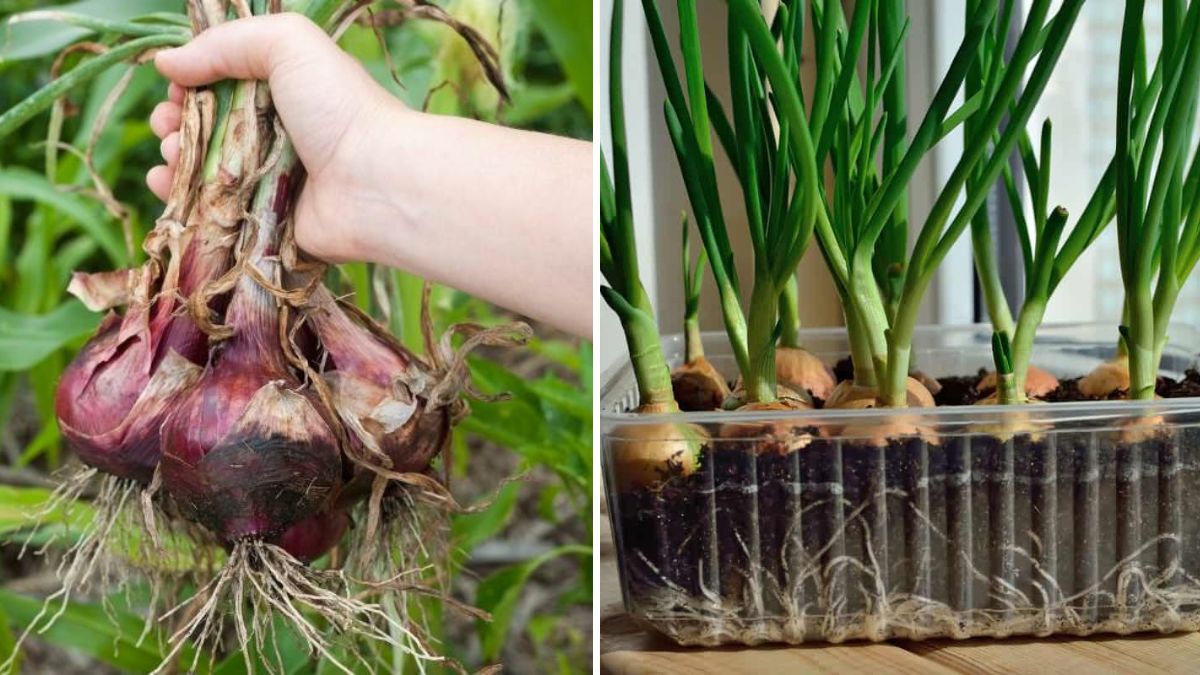
Onions are one of the most widely used vegetables in kitchens across the world. From soups, curries, and salads to pickles and stir-fries, onions add flavor, aroma, and nutrients to almost every dish. But did you know you can grow fresh, organic onions at home in pots, containers, or even small garden beds? Home-grown onions are not only healthier, but they are also tastier, chemical-free, and satisfying to harvest.
This complete seed-to-harvest guide will take you step by step through the process of growing onions at home, covering everything from seed selection, planting, care, and watering to harvesting and storage.
🌱 Why Grow Onions at Home?

Growing onions at home has several advantages:
- ✔ Chemical-free produce – Safe and healthy
- ✔ Cost-effective – Saves money on grocery bills
- ✔ High yield – Even small spaces can produce plenty
- ✔ Easy to grow – Suitable for beginners
- ✔ Versatile harvesting – Use both bulbs and green shoots
Onions are hardy and can be grown throughout the year with proper care, making them ideal for home gardening.
🥚 Choosing Onion Seeds or Sets

There are three main ways to grow onions:
1. Seeds
- Affordable and easy to store
- Takes 90–120 days to mature
- Gives a wide variety of onion types
2. Sets (Small Bulbs)
- Already sprouted small onions
- Faster growth, usually 60–90 days
- Easy for beginners
3. Transplants
- Seedlings raised in trays or pots
- Gives uniform growth and healthy bulbs
For beginners, starting with seeds is rewarding because it lets you experience the entire seed-to-harvest cycle.
🪴 Step 1: Choose the Right Container or Bed

Onions grow well in pots, grow bags, buckets, or garden beds.
Container Requirements
- Depth: 8–12 inches minimum
- Width: At least 10 inches per plant
- Drainage: Must have holes at the bottom
- Material: Plastic, clay, or fabric pots
Garden beds should have well-drained soil and good sunlight.
🌱 Step 2: Prepare the Soil

Onions need loose, fertile, well-draining soil. Compact soil can lead to stunted bulbs or splitting.
Ideal Soil Mix
- 40% garden soil
- 40% compost or vermicompost
- 20% sand or cocopeat
Optional Additives:
- Bone meal for phosphorus (helps bulb growth)
- Neem cake to prevent pests
The soil pH should be slightly acidic to neutral (6.0–7.0).
🌱 Step 3: Sowing Onion Seeds

How to Sow Seeds
- Fill your pot or bed with the prepared soil.
- Create shallow furrows 0.5–1 cm deep.
- Sprinkle seeds evenly in the furrows.
- Cover lightly with soil.
- Water gently using a spray bottle.
Germination
- Seeds typically germinate in 7–14 days
- Keep soil moist and maintain warmth (20–25°C)
- Avoid overwatering, which can rot seeds
🌞 Step 4: Light and Temperature Requirements
- Onions need 6–8 hours of sunlight daily
- Partial shade is acceptable in very hot climates
- Optimal temperature for growth: 15–28°C
Seedlings may be grown indoors or in shaded areas until they are strong enough for transplanting.
🌿 Step 5: Thinning Seedlings
Once seedlings reach 3–4 inches, thin them to avoid overcrowding.
Spacing Guidelines
- Keep 4–5 inches between plants for bulb formation
- Thinned seedlings can be transplanted in another pot or bed
Proper spacing ensures bigger and healthier bulbs.
💧 Step 6: Watering Onions
Onions need consistent moisture but hate soggy soil.
Watering Tips
- Water every 2–3 days depending on weather
- Keep the topsoil slightly dry to prevent fungal infection
- Reduce watering 2–3 weeks before harvest to help bulbs mature
Mulching with dry leaves or straw helps retain moisture and prevent weeds.
🌱 Step 7: Fertilizing Onions
Onions are heavy feeders. Proper nutrition ensures large, healthy bulbs.
Organic Fertilizers
- Vermicompost or cow dung every 15–20 days
- Liquid seaweed fertilizer once a month
- Bone meal or phosphorus-rich fertilizers help bulb development
Avoid too much nitrogen, which promotes leafy growth over bulbs.
🐛 Step 8: Common Pests and Diseases
Onions are relatively hardy, but watch out for:
1. Onion Thrips
- Cause: Tiny insects that damage leaves
- Solution: Neem oil or insecticidal soap
2. Downy Mildew
- Cause: High humidity
- Solution: Provide proper spacing and sunlight
3. Stem and Bulb Rot
- Cause: Overwatering or waterlogging
- Solution: Ensure good drainage, reduce watering
Regular inspection and preventive care are key.
🪴 Step 9: Bulb Formation and Care
Once seedlings are 6–8 inches tall:
- Loosen soil gently around the base
- Remove weeds to reduce competition
- Ensure bulbs are not exposed to sunlight
Onion bulbs grow underground, and their tops indicate readiness for harvest. Healthy leaves mean bulbs are growing well.
⏳ Step 10: Harvesting Onions
Onions are ready to harvest when:
- Leaves turn yellow and begin to fall
- Bulbs push slightly above the soil surface
- Tops feel soft and dry
How to Harvest
- Stop watering 1–2 weeks before harvest
- Gently pull onions from soil
- Brush off excess dirt
- Cure onions in shade for 7–10 days to store
Harvesting at the right time ensures firm, long-lasting bulbs.
🧺 Step 11: Storing Home-Grown Onions
- Store in a dry, cool, and ventilated area
- Avoid plastic bags; use mesh bags or baskets
- Properly cured onions can last for 2–3 months
Green onions or shoots can be harvested earlier for fresh use.
🌿 Tips for Maximum Onion Yield
- Use high-quality seeds or sets
- Maintain proper spacing
- Avoid excessive nitrogen fertilizers
- Mulch to retain moisture and reduce weeds
- Rotate crops to prevent soil-borne diseases
With care, one pot can yield multiple onions or even continuous green onion harvests.
🌱 Growing Onions in Small Spaces
Even if you have limited space:
- Use plastic bottles, buckets, or grow bags
- Plant 1–2 seedlings per pot
- Provide sunlight and adequate water
- Harvest green onions early while bulbs continue growing
This is perfect for balcony or rooftop gardeners.
🌟 Benefits of Home-Grown Onions
- Fresher and tastier than store-bought
- Free from chemicals and pesticides
- Cost-effective for kitchen use
- Supports self-sufficiency and sustainable gardening
- Adds beauty and greenery to your garden
🌿 Conclusion
Growing onions at home is simple, rewarding, and perfect for both beginners and experienced gardeners. By following this seed-to-harvest guide, you can enjoy fresh, flavorful, and organic onions throughout the year. From sowing seeds to harvesting bulbs and storing them, home-grown onions offer satisfaction and incredible health benefits.
Whether in pots, containers, grow bags, or garden beds, you can achieve a bountiful onion harvest with patience, care, and proper attention to soil, sunlight, and water.
Start today, and in just 3–4 months, your kitchen will be filled with the aroma and taste of fresh home-grown onions! 🌱🧅