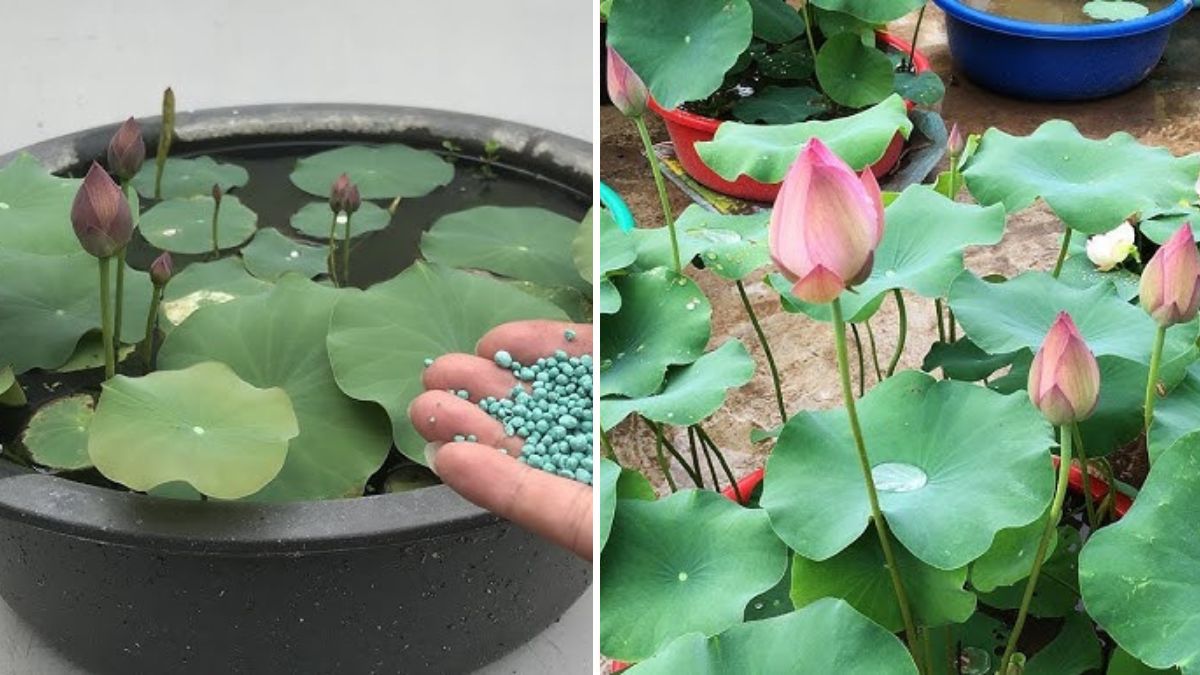
Lotus plants are a symbol of purity, beauty, and tranquility. Whether grown in a pond, water garden, or a container, their vibrant blooms and lush leaves make them a showstopper in any setting. But to grow a lotus that blooms abundantly, proper fertilization and care are crucial. Fertilizing at the right time, in the right way, ensures strong growth, larger leaves, and stunning flowers that can last all season.
In this detailed guide, we’ll take you through everything about fertilizing lotus plants, from soil preparation, types of fertilizers, application methods, frequency, to care tips that result in maximum blooms.
🌱 Why Fertilization is Key for Lotus Plants

Lotus plants (Nelumbo nucifera) are aquatic but very nutrient-hungry. Healthy blooms and robust leaves require:
- Balanced nutrients (Nitrogen, Phosphorus, Potassium)
- Micronutrients like iron, magnesium, and calcium
- A nutrient-rich environment in soil or mud
Proper fertilization helps lotus plants:
- Grow large, healthy leaves
- Produce bigger and more numerous blooms
- Strengthen roots and rhizomes
- Resist pests and diseases
Without fertilizer, lotus may grow leaves but produce few flowers or weak blooms.
🌿 Step 1: Preparing the Soil or Mud
Lotus thrives in rich, loamy soil with good clay content to anchor roots and rhizomes.
How to Prepare Lotus Soil
- Mix 50% clay soil + 30% garden soil + 20% compost or organic manure
- Avoid light sandy soil—lotus roots need firm support
- Fill the container or pond with 6–12 inches of this soil before planting
- Remove any stones or debris to prevent damage to rhizomes
Adding organic matter ensures the soil holds nutrients longer, which is essential for continuous blooming.
🌱 Step 2: Choosing the Right Fertilizer

Lotus plants require both macro and micronutrients. Fertilizers can be organic, chemical, or a combination.
1. Organic Fertilizers
- Well-rotted cow dung or compost
- Vermicompost
- Fish emulsion
- Leaf mold or composted garden waste
Benefits: Slow-release nutrients, improves soil structure, eco-friendly
2. Chemical Fertilizers
Use water-soluble or aquatic plant fertilizers with a balanced NPK ratio.
- For blooming: Low Nitrogen, High Phosphorus & Potassium
- Example: 10:20:20 or 5:10:10
- Avoid high nitrogen fertilizers—they promote leaf growth but reduce flowering
🌸 Step 3: When to Fertilize Lotus

Timing is critical for healthy growth and maximum blooms.
Fertilization Schedule
- Early Spring: After new shoots appear
- Start with slow-release fertilizer or organic manure
- Vegetative Stage: When leaves are expanding
- Boost with nitrogen-rich fertilizer for healthy leaf growth
- Pre-Bloom Stage: About 2–3 weeks before flowering
- Switch to bloom-promoting fertilizer (phosphorus & potassium-rich)
- During Blooming: Optional light fertilization to sustain flowering
🌿 Step 4: How to Fertilize Lotus Plants

Lotus can be fertilized using three main methods:
1. Root Tab Fertilization (Best for Containers & Ponds)
- Fertilizer tablets are placed near the base of rhizomes
- Slowly release nutrients over 2–4 weeks
- Ensures nutrients reach roots directly
2. Liquid Fertilization
- Mix water-soluble fertilizer with water
- Pour gently around the base of the plant
- Avoid direct contact with leaves to prevent burning
3. Organic Manure Layering
- Spread compost or cow dung over soil surface
- Cover with a thin mud layer to prevent floating
- Nutrients release slowly as the water warms
💧 Step 5: Water Management During Fertilization
Lotus plants grow in water, but water level and quality are crucial.
- Water should cover 3–6 inches above soil for young plants
- Maintain 6–12 inches above soil for mature plants
- Fertilize when water is calm (no rain or splashing)
- Avoid over-fertilization—excess nutrients cause algae growth
🌸 Step 6: Tips for Maximum Lotus Blooms

Fertilizer alone isn’t enough. Combine with proper care:
- Sunlight: Lotus needs 6–8 hours of direct sunlight
- Pruning: Remove yellow or dead leaves to encourage new growth
- Temperature: Blooming is best at 24–32°C
- Pest Control: Watch for aphids, snails, or fungal issues
- Spacing: Give each lotus enough space—crowding reduces bloom quality
🌱 Step 7: Organic Fertilizer Recipes for Lotus
1. Compost & Cow Dung Mix
- Mix 2 parts compost + 1 part cow dung
- Place in a mesh bag and bury near roots
- Slowly releases nutrients over 2–3 weeks
2. Fish Emulsion Fertilizer
- 1 part fish emulsion + 10 parts water
- Apply once a week for strong stems and vibrant leaves
3. Liquid Seaweed Extract
- Enhances flowering and leaf color
- 2–3 tablespoons in 1 liter water, spray every 10–15 days
🌿 Step 8: Fertilizer Dos and Don’ts
Dos
- Fertilize early in the morning or late evening
- Use fertilizers suitable for aquatic plants
- Rotate between organic and chemical fertilizers
- Monitor plant response
Don’ts
- Avoid over-fertilizing—leads to algae and poor blooms
- Don’t add fertilizer directly to leaves
- Avoid using fresh manure on young plants—use only composted manure
🌸 Step 9: Monitoring Plant Growth
Healthy lotus plants have:
- Large, upright leaves
- Strong rhizomes anchoring in soil
- Multiple flower buds appearing on long stalks
- Vivid and fragrant blooms
Keep track of bloom count and leaf size to adjust fertilization and care.
🌱 Step 10: Troubleshooting Bloom Issues
If lotus isn’t flowering:
- Too many leaves, no flowers – Fertilize with phosphorus & potassium-rich fertilizer
- Small or few blooms – Ensure full sunlight and remove crowded leaves
- Yellow leaves – Check for nutrient deficiency or water issues
- Slow growth – Use slow-release fertilizer at root level
🌸 Step 11: Post-Bloom Care
After flowering:
- Remove spent flowers to encourage new buds
- Fertilize lightly with compost
- Reduce water slightly during dormancy
- In winter, protect rhizomes if temperatures drop below 15°C
Proper post-bloom care ensures the lotus comes back strong next season.
🌟 Bonus Tips for Maximum Blooms
- Use rhizomes with previous flowering history
- Provide deep water for larger blooms
- Fertilize every 2–3 weeks during active growth
- Avoid disturbing roots while adding fertilizer
- Rotate liquid and slow-release fertilizers for balanced nutrition
🌿 Conclusion
Fertilizing lotus plants correctly is the key to abundant, vibrant, and healthy blooms. By using a combination of organic and bloom-promoting fertilizers, maintaining proper water levels, and following a scheduled fertilization routine, you can enjoy a spectacular lotus display throughout the growing season.
Remember, healthy roots lead to strong leaves, and strong leaves support more flowers. With patience, care, and proper fertilization, your lotus pond or container will reward you with breathtaking blooms and lush greenery all season long.
Start fertilizing today, and watch your lotus plants transform into a blooming paradise! 🌸💚