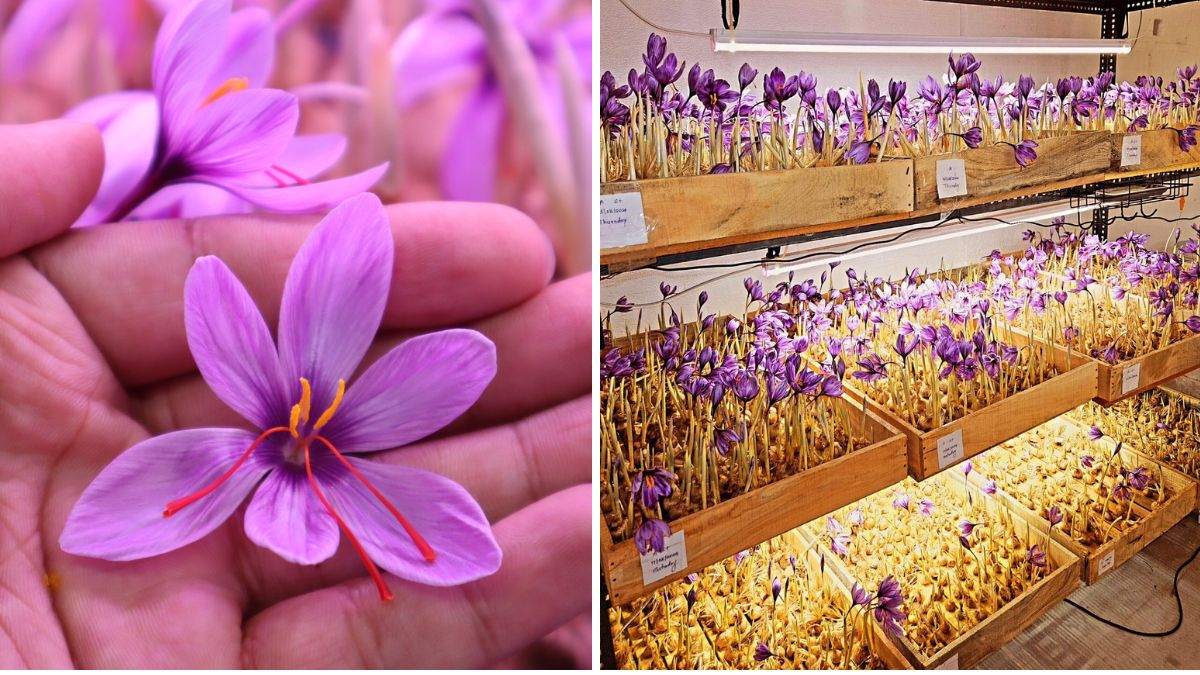
Saffron—also known as kesar—is the world’s most expensive spice. But what if you could grow this “red gold” right at home, indoors, and that too for just ₹500? Sounds unbelievable, right? Yet it’s absolutely possible. With a handful of high-quality saffron bulbs, a small tray, and a sunny indoor spot, anyone can cultivate saffron successfully—even beginners with no farming experience.
In this comprehensive and beginner-friendly guide, we take you step-by-step through how to grow saffron indoors, from selecting bulbs to harvesting your precious red stigmas. Kesar farming at home is not only affordable but also incredibly rewarding. Let’s uncover the secrets to growing real saffron in your own living space.
Why Growing Saffron Indoors Is a Brilliant Idea
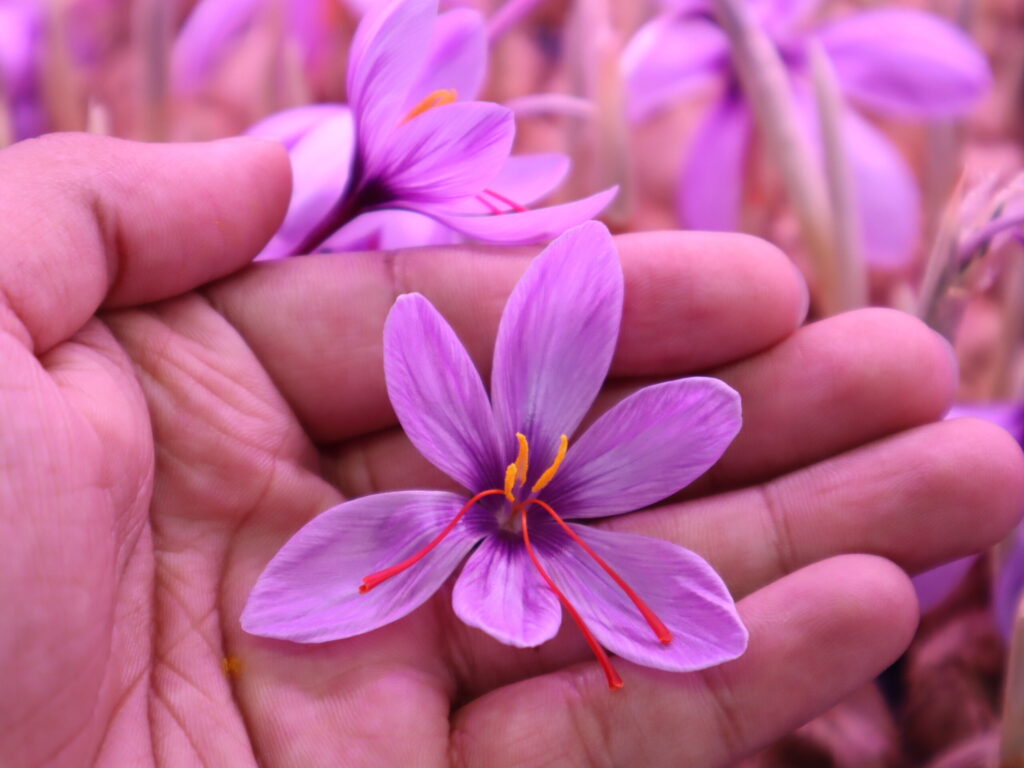
Most people believe saffron farming requires large fields or special climates, but the truth is that saffron (Crocus sativus) grows beautifully indoors if you understand its basic needs.
Here’s why indoor saffron farming is gaining popularity:
✔ Grow saffron in any city
Whether you live in Delhi, Mumbai, Chennai, or Bangalore, saffron bulbs can thrive indoors as long as they receive cool temperatures and sunlight.
✔ Incredibly low investment
You can start your own kesar farm with ₹300–₹500 worth of bulbs.
✔ Minimal space required
Use a pot, tray, or even a balcony shelf.
✔ High-quality, pure saffron
Homegrown saffron is chemical-free, fragrant, and rich in color.
✔ Low maintenance
Saffron is drought-tolerant and needs very little care.
✔ A unique gardening experience
Watching deep-purple flowers bloom indoors is a magical experience.
Understanding the Saffron Plant (Crocus sativus)
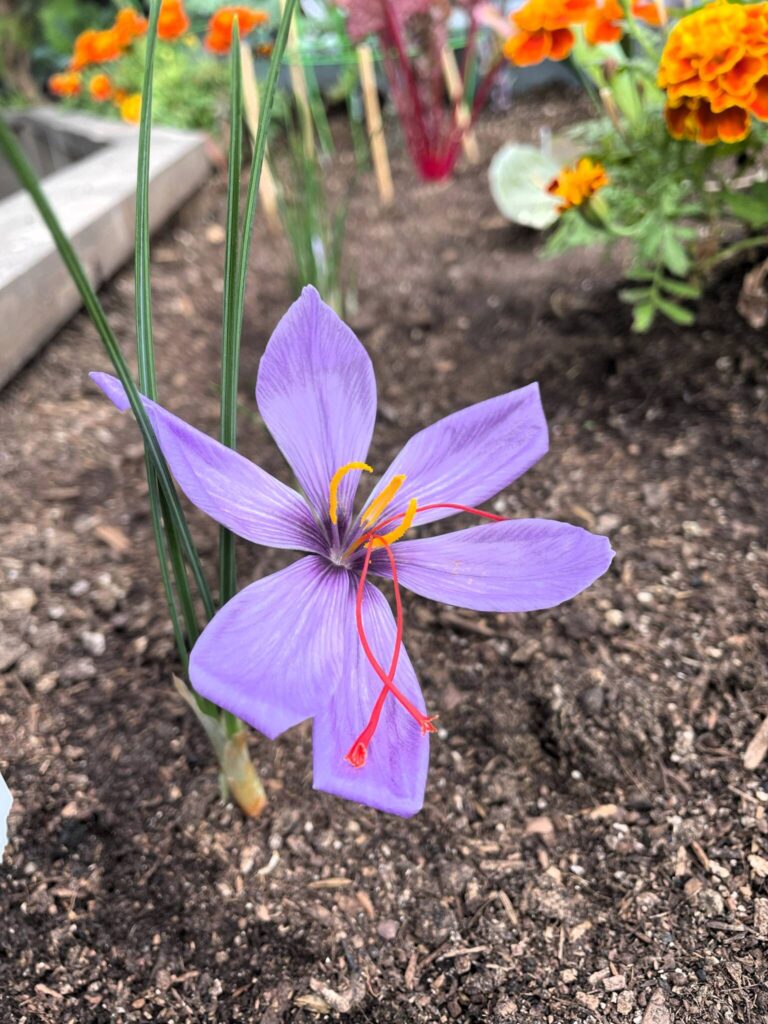
Before you start planting, it helps to understand what makes saffron so unique.
What part is saffron?
The red threads you see are the stigmas of the saffron flower.
How does it grow?
Saffron comes from corms, not seeds.
Blooming season
Flowers bloom once a year—usually in October–November.
Climate requirements
- Cool weather
- Bright indirect sunlight
- Well-draining soil
- Good airflow
Even if you live in a hot area, saffron bulbs grown indoors still perform well because you can control temperature and light.
What You Need to Grow Saffron Indoors for ₹500
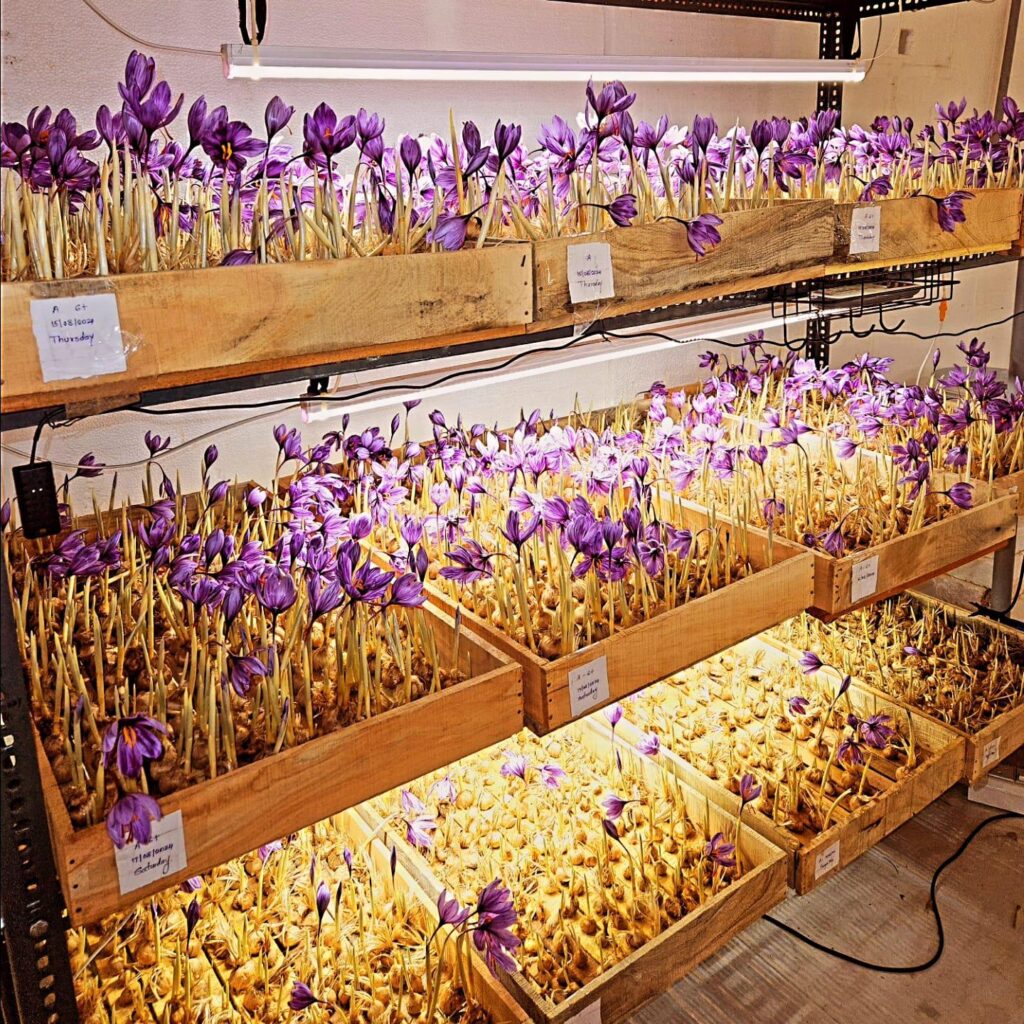
Here’s everything needed—affordable and easily available:
✔ Saffron corms (10–15 bulbs) – ₹300–₹500
Buy from trusted plant nurseries or online sellers.
✔ Tray or pot – ₹50–₹100
Choose a container 6–8 inches deep with drainage holes.
✔ Soil mix – ₹30–₹80
Best mix: 50% garden soil + 30% sand + 20% compost.
✔ Spray bottle (optional) – ₹30
That’s it! No fancy equipment required.
Step-by-Step Guide: How to Grow Saffron Indoors
Let’s walk through every stage of indoor kesar farming.
1. Selecting High-Quality Saffron Corms
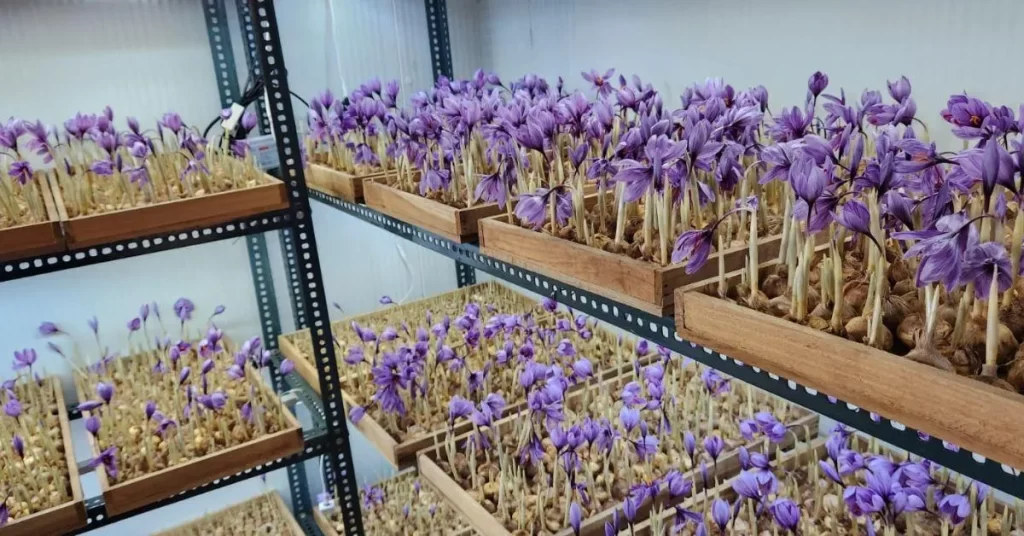
The quality of bulbs decides your success.
Choose bulbs that are:
- Firm and healthy
- 2.5–3 cm or bigger
- Free of mold
- Brown and dry
Larger bulbs produce more flowers. Always avoid soft or moist bulbs.
2. Preparing the Pot or Tray
Saffron grows in shallow soil because the bulbs do not need deep planting.
Ideal container requirements:
- Minimum 6 inches deep
- Wide and flat
- Good drainage
- Breathable material (terracotta recommended but plastic also works)
Add drainage stones at the bottom for extra airflow.
3. Making the Soil Mix
Saffron does not tolerate waterlogging. Use a light, well-draining mix.
Perfect soil recipe:
- 50% garden soil
- 30% river sand
- 20% compost or vermicompost
Mix well before filling the pot.
4. Planting the Saffron Bulbs
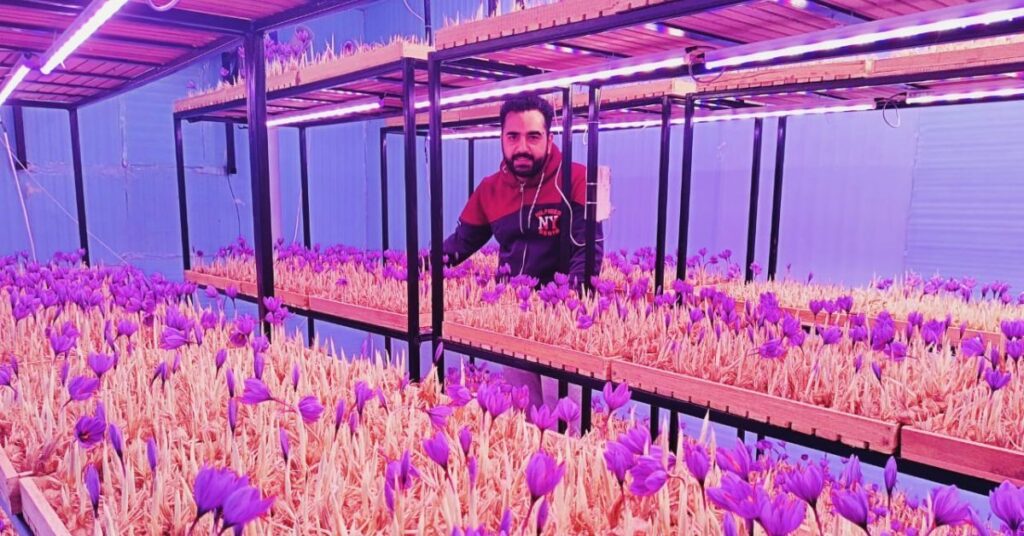
Planting time:
July–September (best for indoor growing)
How to plant:
- Fill the pot with soil mix.
- Plant corms 3 inches deep.
- Keep a 2–3 cm gap between bulbs.
- Pointed side upward.
- Cover them gently with soil.
- Water lightly once after planting.
Place your pot near a window where it receives bright indirect sunlight.
Caring for Indoor Saffron Plants
This is the simplest part—saffron needs almost no maintenance.
1. Watering Schedule
Saffron prefers dry soil.
Rules:
- Do NOT overwater
- Water once every 7–10 days
- During flowering, reduce watering even more
Always check the soil before watering—it should be dry on top.
2. Light Requirements
Saffron bulbs require:
✔ 4–6 hours of indirect sunlight
A north or east-facing window works best.
Avoid harsh afternoon sun.
3. Temperature Needed
Saffron thrives in cool conditions:
Ideal indoor temperature:
15–25°C
Avoid placing pots near stoves, heaters, or hot appliances.
4. Indoor Air Circulation
Good airflow prevents fungal infections.
If the room is closed, run a fan on low speed for 10–15 minutes daily.
The Blooming Process: What to Expect
This is the most exciting part!
About 6–8 weeks after planting, you’ll notice green shoots emerging.
Timeline
- Week 2–3: First green shoots
- Week 4–6: Leaves grow longer
- Week 6–8: Purple flowers begin to bloom
- Bloom lasts: 2–3 weeks
Each corm typically produces 1–4 flowers depending on size.
How to Harvest Saffron Indoors
Harvesting saffron is delicate but simple.
Steps:
- Pick flowers early in the morning when they are fresh.
- Open the petals gently.
- Remove the three red stigmas using clean fingers or tweezers.
- Place the stigmas on a clean tissue to dry.
Drying saffron:
- Air-dry for 24–48 hours
- Store in an airtight glass jar
Fresh homegrown kesar is incredibly fragrant and bright red.
How Much Saffron Can You Expect?
From 10–15 bulbs, you can harvest:
15–45 threads of saffron per season
This equals 1–1.5 grams of pure kesar—enough for home use.
Because the bulbs multiply, you get more flowers every year.
Next season, your 15 bulbs may become 30–40 bulbs, doubling your harvest at no extra cost.
Replanting and Storing Saffron Bulbs
Once the flowering season ends (usually by December), leaves will turn yellow.
Here’s what to do:
- Stop watering completely.
- Allow plants to dry naturally.
- Remove bulbs from soil.
- Separate baby bulbs from mother bulbs.
- Store bulbs in a cool, dry place for next season.
Replant them again next year—you’ll get an even better harvest.
Common Problems & Solutions
1. Bulbs Rotting
Cause: Overwatering
Solution: Water less and improve drainage.
2. Bulbs Not Sprouting
Cause: Poor-quality bulbs
Solution: Always buy from trusted sellers.
3. Plants Turning Yellow Early
Cause: Too much sunlight or heat
Solution: Keep indoors in a cool corner.
4. No Flowers
Cause: Bulbs were too small
Solution: Use bulbs 2.5–3 cm or bigger.
Tips for 100% Success in Indoor Saffron Farming
✔ Use large, healthy bulbs
✔ Avoid overwatering at all costs
✔ Keep bulbs cool and dry
✔ Provide bright indirect sunlight
✔ Plant in sandy, loose soil
✔ Maintain good airflow indoors
✔ Harvest flowers early in the morning
Follow these simple steps, and your indoor saffron project will succeed effortlessly.
Final Thoughts: Grow Your Own Saffron Without a Farm
Growing saffron indoors is not just possible—it’s incredibly easy and affordable. With an investment as small as ₹500, you can enjoy your own homegrown kesar every year. It adds beauty to your indoor space, requires almost no maintenance, and offers a magical gardening experience unlike any other.
Whether you’re a beginner gardener or someone who loves unique plants, saffron is a wonderful addition to your home garden. Start small, watch the purple flowers bloom, and enjoy the pride of harvesting your very own red-gold threads.